
Rock County Probate Division
Probate in Rock County is handled by Rock County District Court as the Probate Division of District Court. The Minnesota Judicial Branch lists Rock County District Court at the Rock County Courthouse, 204 E. Brown Street, Luverne, MN 56156, phone (507) 935-7006. The Court Administrator is Natalie Reisch. The court's stated jurisdiction covers civil, family, probate, juvenile, criminal, and traffic cases filed in Rock County, so probate is part of the regular state District Court structure.
No separate Rock County probate court, county court, municipal court, or justice court was found in the official Minnesota structure map. The Fifth Judicial District provides administrative oversight across southwest Minnesota, but probate hearings and probate files for Rock County are local District Court matters. Marriage certificates, birth and death certificates, and real estate records are different because those records are held by the Land Records Office, not by court administration.
Rock County Probate Division of District Court
Court Administrator: Natalie Reisch
Rock County Courthouse
204 E. Brown Street
Luverne, MN 56156
(507) 935-7006
County office hours: Monday-Friday, 8:00 a.m.-5:00 p.m.
Rock County Probate Record Types
Rock County probate records may include estate petitions, informal probate filings, formal probate pleadings, appointment documents for a personal representative, inventories, creditor notices, accountings, decrees of distribution, trust files, guardianship files, conservatorship files, minor estate guardianships, and will safekeeping deposits. Adult estate files are often public, but document access still depends on the case type and the contents of each filing.
Guardianship and conservatorship files can contain medical details, financial data, vulnerable-adult information, restricted identifiers, and private reports. Public access may show the case header or event history while blocking sensitive documents. Probate records tied to contested estates, real property, creditor claims, missing heirs, or protected-person issues can require closer review by court administration before copies are released.
Minnesota's small estate affidavit statute affects whether a full Rock County probate file exists at all.
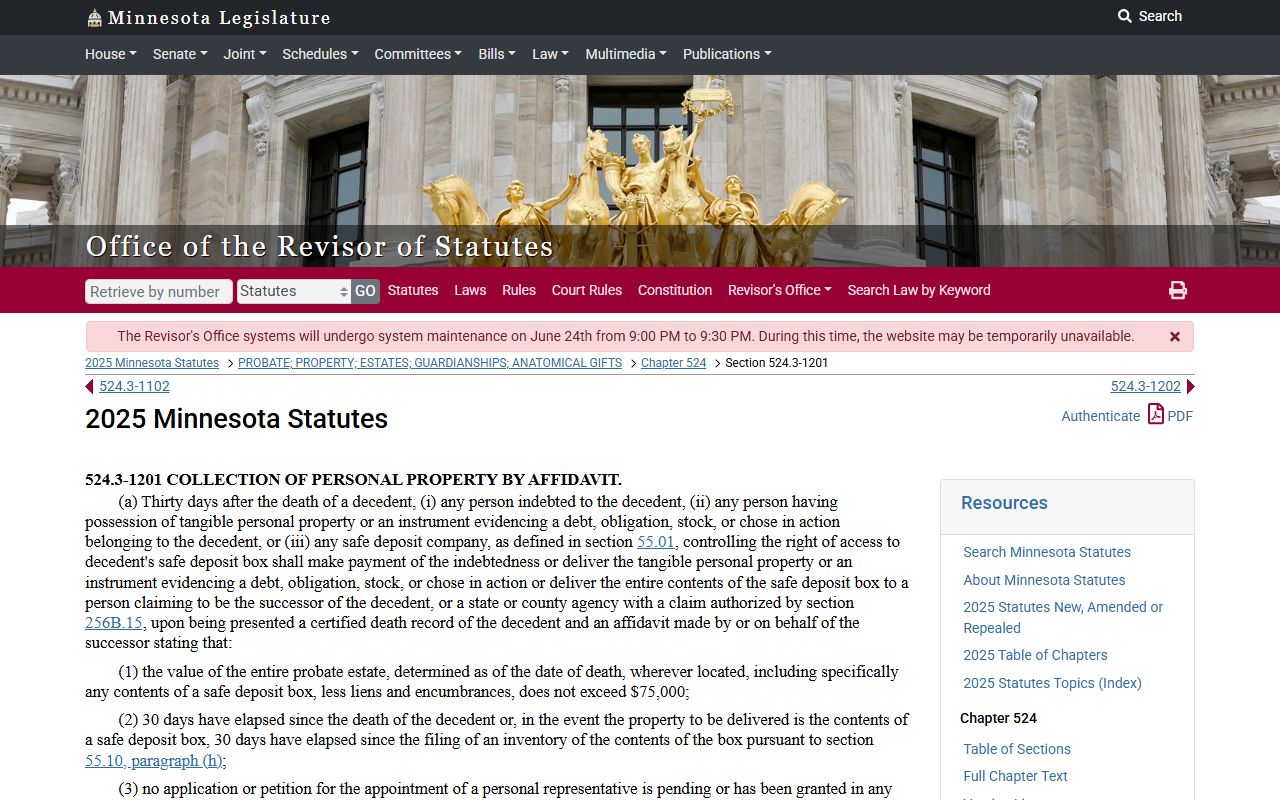
When an estate qualifies for affidavit collection, a person may not need to open a formal probate case in Rock County District Court.
Rock County Probate Terms
Probate terms appear in MCRO results, petitions, hearing notices, and court orders. Plain-language definitions keep the search practical. They do not replace legal advice, but they help identify which record or copy to request from court administration.
- Testator
- The person who made a will.
- Personal representative
- The person appointed by the court to administer an estate; many older references use executor for a person named in a will.
- Intestate
- Dying without a valid will, which means Minnesota succession law controls who may inherit probate assets.
- Inventory
- A filing that identifies estate assets and values for court administration and interested persons.
- Guardianship
- A court case appointing someone to make personal or care decisions for a minor or protected person.
- Conservatorship
- A court case appointing someone to manage money or property for a protected person.
Search Rock County Probate Records
The online route for public Rock County probate case information is MCRO Case Search. Search by the decedent's name, party name, or case number if known, and narrow to Rock County when a county filter is available. Use MCRO Document Search only when a case number is known and the public document is remotely available. If the record is old, sealed, restricted, or not posted online, contact court administration.
- Confirm that the decedent, protected person, ward, or trust matter belongs in Rock County rather than another Minnesota county.
- Search MCRO by name and county, then open the case result to review the register of actions and public document links.
- Use the case number in Document Search if the public filing or order is available online.
- Call or visit Rock County District Court Administration for certified copies, older files, will deposits, or restricted-access questions.
- If no case appears, consider whether a small estate affidavit, nonprobate transfer, trust, beneficiary designation, or no probate filing may explain the absence.
The Rock County department directory also separates District Court, Land Records, sheriff, county attorney, corrections, and other county offices. That split helps prevent probate copy requests from being sent to the wrong office. Sheriff Matthew Sorenson's office handles law enforcement records and jail-related questions, not probate estate copies.
Rock County Probate Fees
The official Rock County District Court fee schedule lists probate filing and copy costs. Checks for District Court fees are payable to District Court Administrator. Filing fees can change through state law and court rules, so the court fee page should be checked before a petition or copy request is mailed.
| Probate or copy item | Amount | Notes |
|---|---|---|
| Estates, trusts, guardianships, conservatorships first paper | $320 | Probate first filing category in Rock County District Court. |
| Deposit of wills for safekeeping | $27 | Will deposit category listed by the court fee schedule. |
| Certified copy of civil or criminal instrument | $14 | Used for certified court copies when applicable. |
| Exemplified and certified copy | $28 | Higher authentication copy option. |
| Uncertified public imaged document printout | $0 | Fee page lists no charge for several uncertified printout categories. |
| CMS report, 1-50 pages | $5 | Per report generated from the case management system. |
| CMS report, 50+ pages | $25 per 50 pages or part | Applies to longer case management reports. |
Rock County Small Estates
Minn. Stat. § 524.3-1201 allows collection of certain personal property by affidavit when the value of the entire probate estate does not exceed $75,000 and 30 days have passed since death, with special timing rules for safe deposit boxes. This is not a court-record search portal. It is a probate alternative that may explain why a family can transfer property without a formal Rock County estate file.
A small estate affidavit is most relevant when assets are limited and no formal court appointment is needed. Real estate, disputes among heirs, creditor claims, unclear ownership, contested wills, or protected-person issues may still require court filings. If a person expects a probate case but MCRO has no result, the next step is to ask Rock County District Court Administration whether a case exists outside remote access, whether a will is deposited, or whether no probate file has been opened.
Opening a Rock County probate case is a different path from searching an existing file. The first paper starts the court case and triggers the probate filing fee unless a waiver applies. After filing, the court may address appointment authority, notice to interested persons, inventory duties, creditor issues, accountings, and final distribution. A contested estate, trust dispute, guardianship, or conservatorship can produce more hearings and more restricted documents than a routine informal estate.
Note: A small estate affidavit can reduce the need for a court case, but it does not make restricted probate information public.
Rock County Probate Boundaries
Probate is state court work, but bankruptcy and federal litigation are separate. The U.S. Bankruptcy Court for the District of Minnesota handles federal bankruptcy matters, and those records are not Rock County probate records. A decedent's estate may also intersect with federal tax, bankruptcy, or civil litigation, but the local estate file remains in Minnesota District Court if a Rock County probate case is opened.
The federal bankruptcy court site is one assigned source for distinguishing federal case records from Rock County probate records.
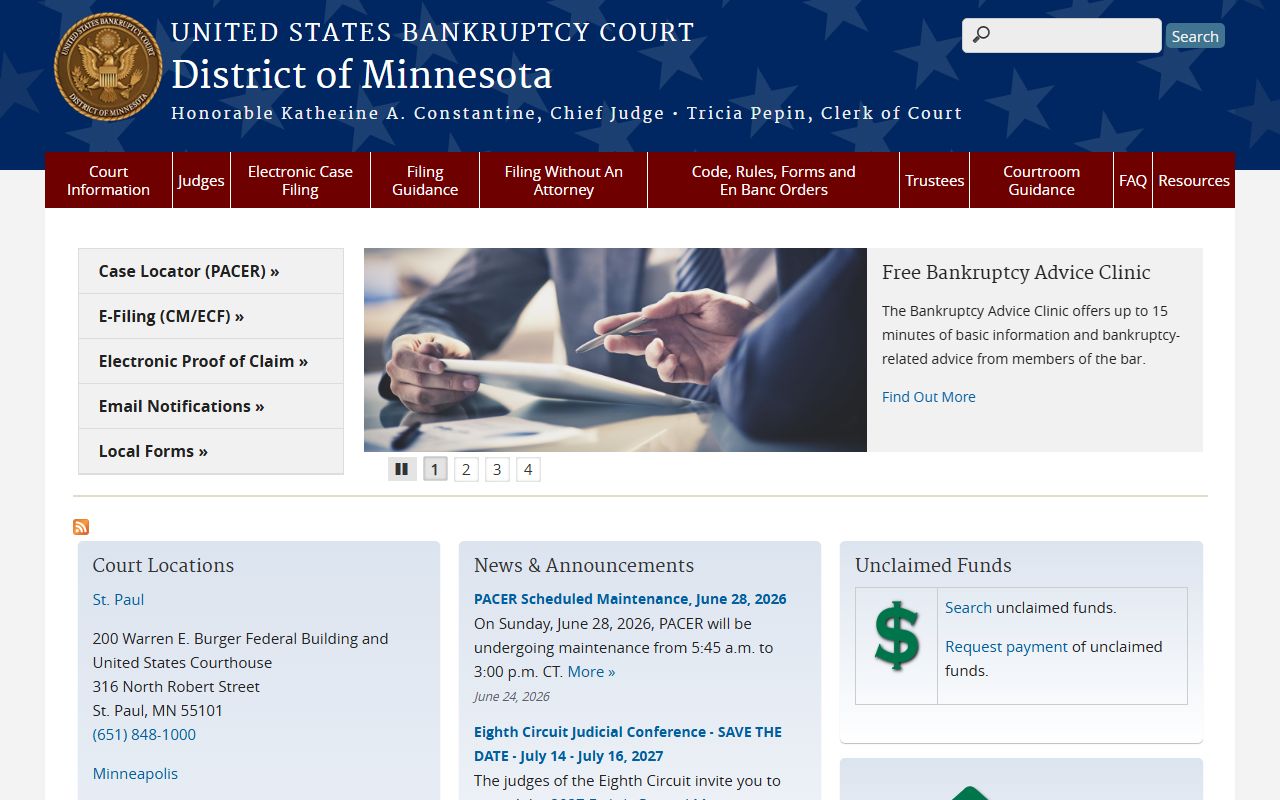
Use bankruptcy resources for federal debtor cases, but use Rock County District Court for probate petitions, wills, estate orders, and guardianship or conservatorship files.
Restricted Rock County Probate Records
Public access to Rock County probate records follows the Minnesota Rules of Public Access and document-specific limits. Rule 4 identifies categories of case records that are not accessible to the public. In probate practice, limits often arise when documents include medical records, financial account numbers, Social Security numbers, restricted identifiers, vulnerable-adult data, minor information, or confidential reports.
A public probate case may therefore have a public docket but a mixed document set. Orders, notices, and some estate filings may be available, while evaluations, account details, confidential information forms, and protected-person reports may be withheld or redacted. A requester who needs restricted material should ask court administration what authority, party status, attorney appearance, or court order is required before paying for copies.
Federal CM/ECF docket access is another separate system and does not replace MCRO or Rock County District Court Administration for state probate files.
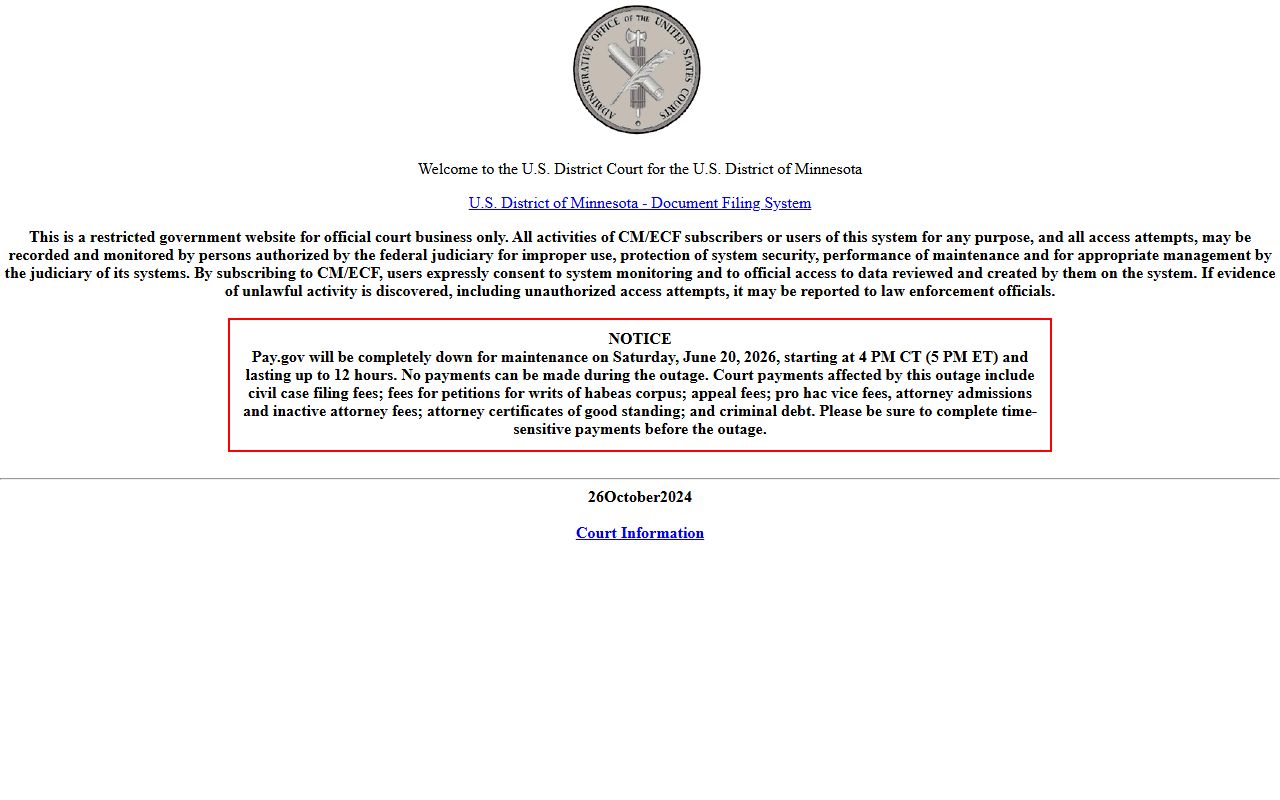
The separate federal docket system reinforces the main access rule: Rock County probate copies come from the state court record custodian unless the matter is truly federal.