
Criminal Court Records in Rock County
A Rock County criminal court record is the case-level file maintained by Rock County District Court after a prosecutor files a complaint, citation, or other charging document. The file may include the complaint, charges, statute references, hearing notices, warrants where public, plea entries, motion practice, orders, probation violation filings, disposition, and sentencing documents. It is the court record of the prosecution, not the arrest record itself.
Rock County District Court has original jurisdiction over criminal cases filed in the county. Minnesota does not use a separate county court, municipal court, or justice court structure for these case records in Rock County. The courthouse and court administration office are located at 204 E. Brown Street in Luverne, and the Minnesota Judicial Branch identifies Natalie Reisch as Court Administrator. County Attorney Jeff Haubrich's office is the prosecuting office for Rock County adult criminal cases, juvenile delinquency matters, and certain traffic or gross misdemeanor matters.
The Rock County County Attorney page identifies Jeff Haubrich as the local prosecuting official.
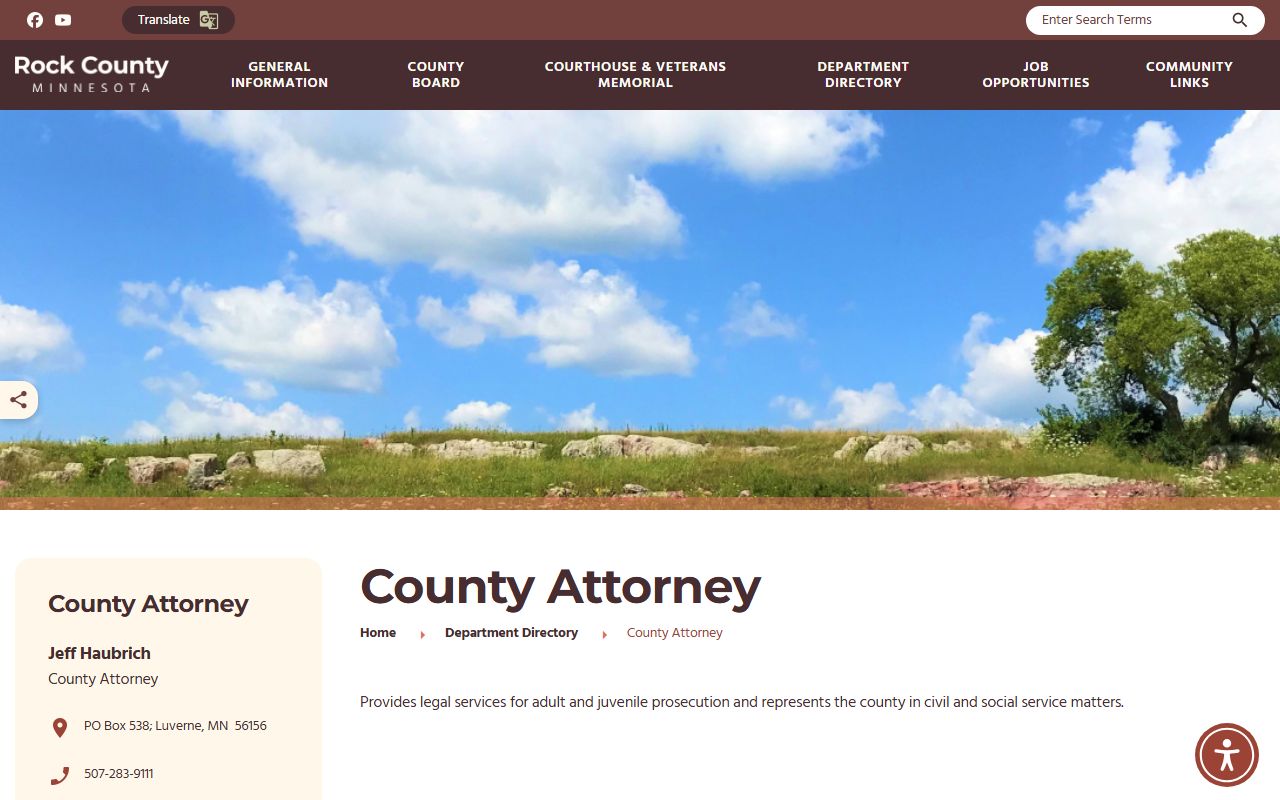
That office context matters because jail charges, citation language, and filed court charges may not match until the prosecutor's charging decision is reflected in District Court.
How to Search Rock County Criminal Court Records
Use MCRO Case Search for public criminal case details. Search by case number when possible because MCRO's FAQ warns that person or business searches for criminal cases may not return cases that have not resulted in conviction. A case number such as 67-CR-25-174 is stronger than a name search because it points directly to Rock County and the criminal case type. Citation-number searching can also help when the case started with a ticket or citation.
- Open MCRO Case Search and choose the case number, citation number, or name search path.
- Enter a Rock County criminal case number if known, or use defendant name details carefully if the case has a conviction.
- Confirm the county or the 67 case-number prefix before opening a result.
- Review the register of actions for charges, hearings, pleas, motions, disposition, and sentencing entries.
- Use MCRO Document Search or contact Rock County District Court Administration for public copies or certified copies.
MCRO can be incomplete for criminal records. Known cases may be missing because the case is pending without conviction, confidential, sealed, expunged, destroyed under retention rules, or not available remotely. Court administration is the local fallback for case-specific access questions, copy requests, and older files. The Rock County Sheriff's Office, led by Sheriff Matthew Sorenson, may have arrest or warrant information, but the District Court file is the source for filed criminal charges and court dispositions.
Stages of a Criminal Case
Criminal court records develop in stages. The first law-enforcement event may be an arrest, citation, or warrant, but the court file begins when a charging document is filed in District Court. From there, the register of actions tracks hearings, filings, orders, plea decisions, trial activity, disposition, and sentence. Probation violations or warrant events can add later docket entries after sentencing.
Case flow: Charges Filed › Arraignment › Pretrial / Motions › Plea or Trial › Disposition › Sentencing
| Stage | What Happens |
|---|---|
| Charges Filed | The prosecutor files a complaint, citation, or charging document with statute, offense, and severity details. |
| Arraignment | The defendant is advised of the charge and court process, and plea or scheduling issues may be addressed. |
| Pretrial / Motions | The parties address discovery, plea discussions, scheduling, admissibility, omnibus issues, or requests for court orders. |
| Plea or Trial | The case is resolved by plea, trial verdict, dismissal, acquittal, or another court-approved outcome. |
| Sentencing | The court imposes penalties after conviction, which may include jail, probation, fines, conditions, or stayed terms. |
Rock County is also tied to the Minnesota Cornerstone Drug Court: Rock-Nobles Adult Drug Court. The official treatment court list identifies Heather Kirchner as coordinator, gives an address at 1530 Airport Road in Worthington, and lists phone (507) 295-1019. Treatment court is not a separate public criminal database. It is a problem-solving court pathway that can involve supervision, treatment, accountability, and frequent status review when eligibility and referral requirements are met.
What a Rock County Criminal Court Record Shows
A criminal case file may combine structured court fields with documents and docket events. The public display can include the defendant's name, case number, case status, case type, charges, charge severity, statute, hearing history, plea, disposition, sentence, bond or warrant events where public, attorney names, judicial officer, and public documents. Sensitive identifiers are redacted or withheld, and some criminal documents may not be available online even when the case itself is public.
| Field | What It Shows |
|---|---|
| Case Number | The Rock County criminal identifier, commonly formatted with 67, CR, year, and sequence. |
| Defendant | The person charged in the District Court case. |
| Charges | The alleged offenses, statute references, severity levels, and charge counts filed with the court. |
| Plea | The defendant's formal response or later plea entry, if public and entered in the file. |
| Disposition | The result for the charge or case, such as guilty, dismissed, acquitted, or another court outcome. |
| Sentence | The penalty imposed after conviction, including probation, jail, fines, stayed terms, or conditions when public. |
| Register of Actions | The chronological list of filings, notices, hearings, orders, and later events such as probation violations. |
The U.S. Attorney's Office for the District of Minnesota handles federal prosecutions, which are separate from Rock County District Court cases.
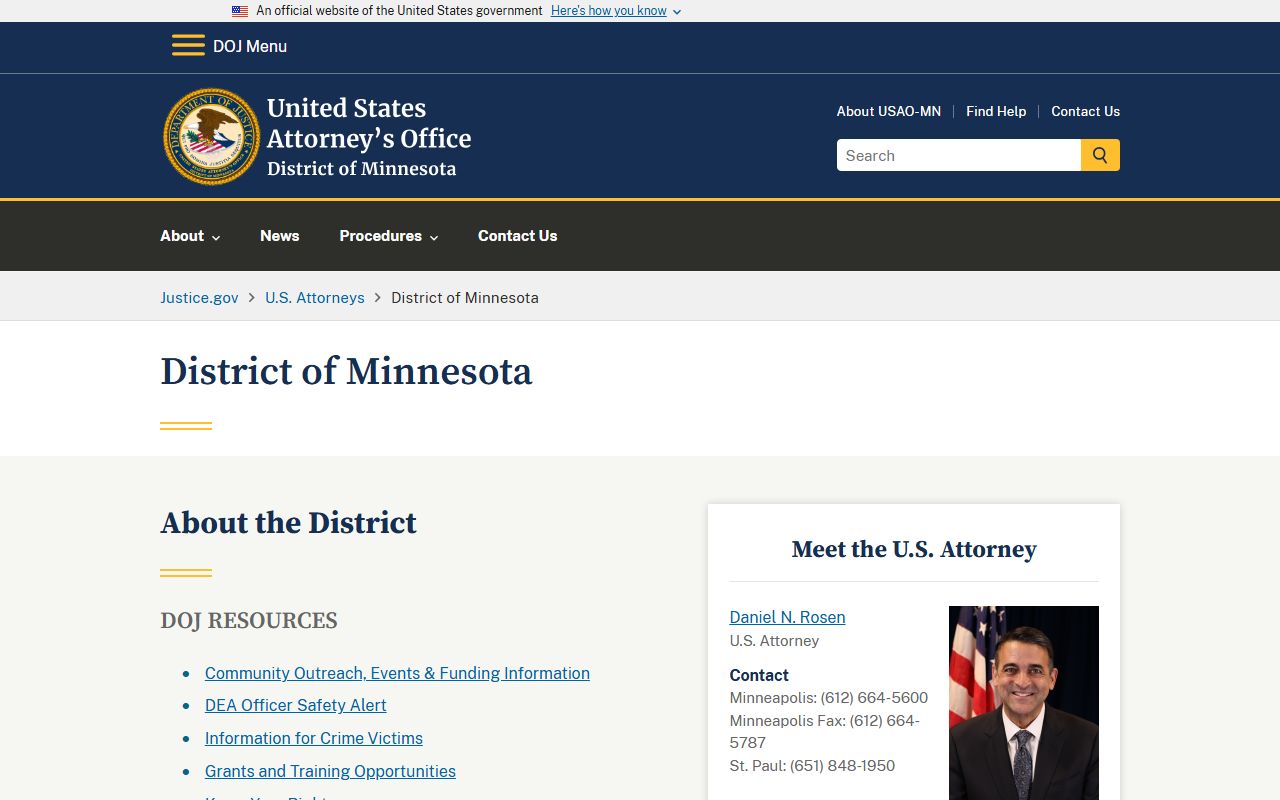
Federal criminal dockets are not stored in MCRO or Rock County District Court files; they are handled through federal court systems such as PACER and CM/ECF.
Charges vs. Convictions
A charge is an allegation filed by the state. A conviction is a court outcome after a guilty plea, guilty verdict, or qualifying adjudication. Rock County criminal court records can show charges that were later dismissed, amended, acquitted, or resolved by plea. Arrest records and jail roster entries can show alleged conduct before a prosecutor files the final court complaint, while the criminal case file shows what was actually filed and how the court resolved it.
| Charge | Conviction | |
|---|---|---|
| Meaning | An accusation filed in court or listed in a citation or complaint. | A finding or plea of guilt entered as a judgment or adjudicated outcome. |
| Timing | Appears early in the court process, often before plea or trial. | Appears after plea, verdict, or court disposition. |
| Proof Level | Based on charging standards and probable cause. | Based on plea or proof beyond a reasonable doubt at trial. |
| Record Effect | May be dismissed, amended, or remain pending. | Can lead to sentencing, probation, fines, custody, or collateral consequences. |
For charge-only questions after arrest, the narrower record path is the filed complaint, citation, sheriff information, or jail roster. For a complete criminal court record, use the District Court case file and disposition entries.
Reading Dispositions and Sentences
Disposition entries show what happened to a charge or case. Common plain-language results include guilty, not guilty, dismissed, acquitted, continued, or stayed outcomes. A sentence entry can show jail, probation, fines, conditions, restitution, treatment requirements, or other penalties. Probation means the person serves a supervised sentence in the community under court conditions. A probation violation entry means the court received an allegation that those conditions were violated.
Some criminal cases also interact with warrants and custody. A bench warrant may be issued for failure to appear. A warrant arrest may show on a jail roster before the court docket has the next hearing. Rock County contracts with Nobles County for jail services, so current custody information for Rock detainees may appear through the Nobles County inmate listing while the court case remains in Rock County District Court.
Sealed vs. Expunged Records
Restricted criminal records require careful reading because "sealed" and "expunged" are often used loosely. In Minnesota, criminal expungement generally seals the record from public view rather than physically destroying every government record. Courts, prosecutors, law enforcement, licensing agencies, or other authorized entities may still have defined access depending on the order and statute.
| Sealed | Expunged | |
|---|---|---|
| Public Visibility | Hidden from ordinary public access by rule or court order. | Sealed from public view under Minnesota expungement law when granted or automatic rules apply. |
| Access After Restriction | May remain available to parties, attorneys, agencies, or people with court authorization. | May remain available to courts, prosecutors, law enforcement, or licensing agencies in defined circumstances. |
| Eligibility | Depends on case type, court rule, statute, or order. | Depends on Minn. Stat. ch. 609A, including grounds and excluded offenses. |
| Search Effect | May not appear in MCRO or may show limited public information. | Usually does not appear in ordinary public MCRO results once sealed from public access. |
Minnesota's expungement grounds statute explains which criminal records can and cannot be expunged.
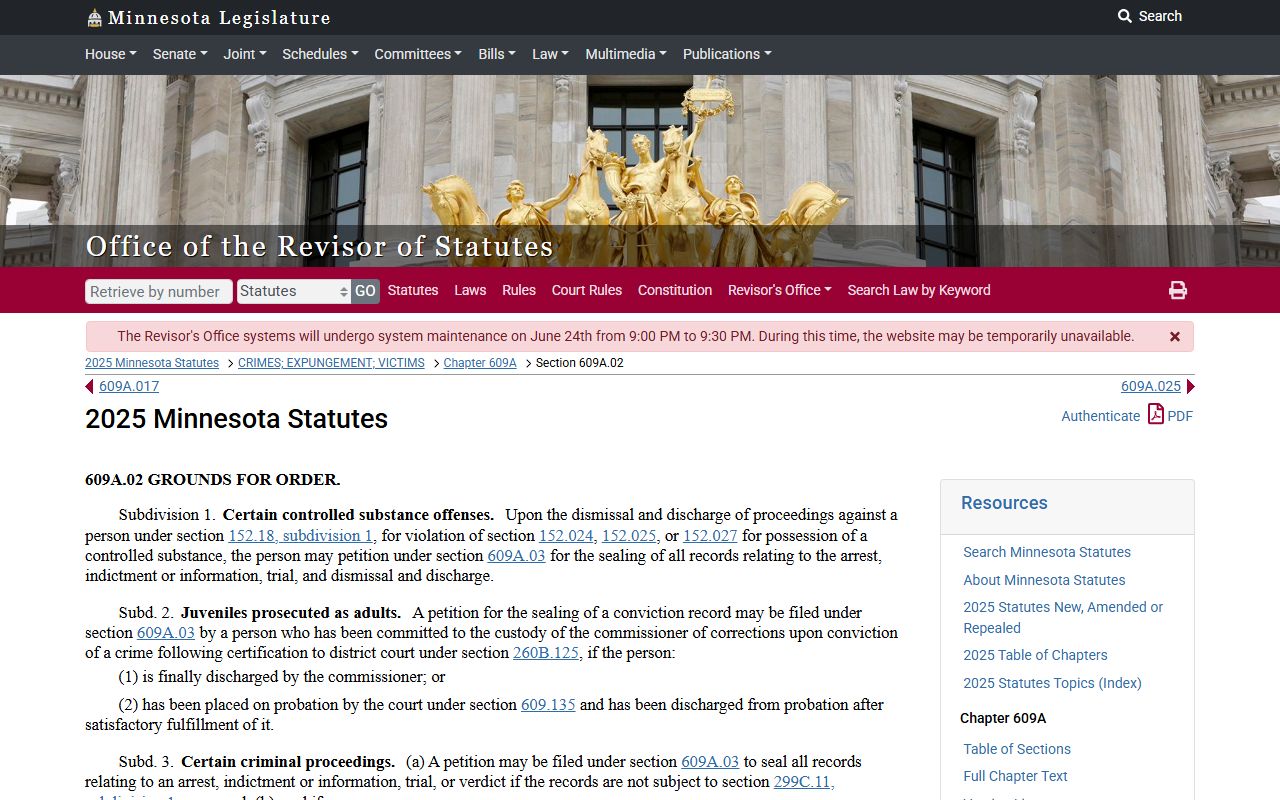
Some convictions are not expungeable, including certain convictions requiring predatory-offender registration, so eligibility must be checked against the statute and the specific case history.
The petition-to-expunge statute controls the petition process when a court filing is required.
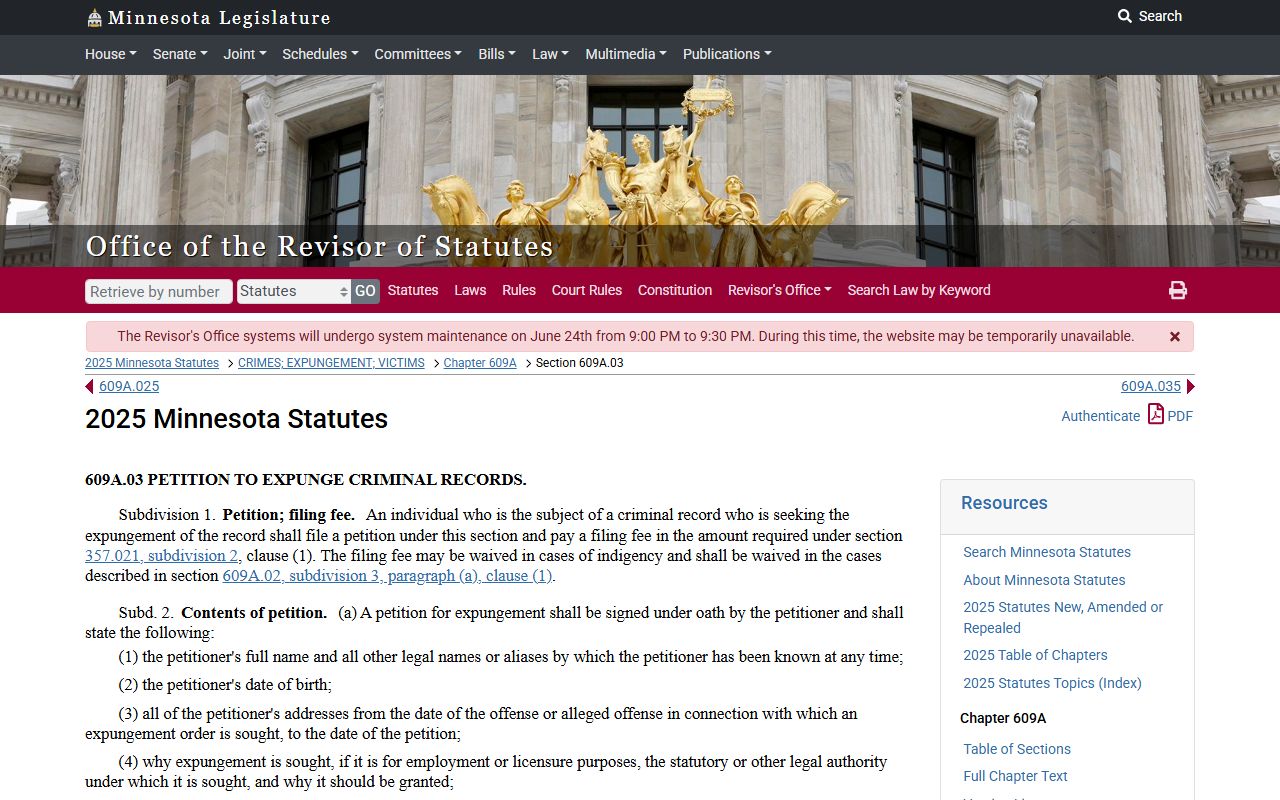
The Rock County fee schedule lists criminal expungement at $320, although fee waivers may apply for indigency or qualifying statutory categories.
Public Access to Criminal Court Records
Minnesota public access law separates court records from county executive-branch data. Court records follow the Minnesota Rules of Public Access to Records of the Judicial Branch. Rule 8 governs inspection and copying of public court records, while Rule 4 identifies categories of records that are not accessible to the public. County law-enforcement records follow Minn. Stat. ch. 13 when they are sheriff or county data rather than court case records.
Key Statutes:
Minnesota Rules of Public Access Rule 8 - public court records may be inspected or copied from the custodian, subject to court rules and remote-access limits.
Minnesota Rules of Public Access Rule 4 - certain records, including juvenile, medical, domestic abuse, harassment, and protected materials, are not publicly accessible.
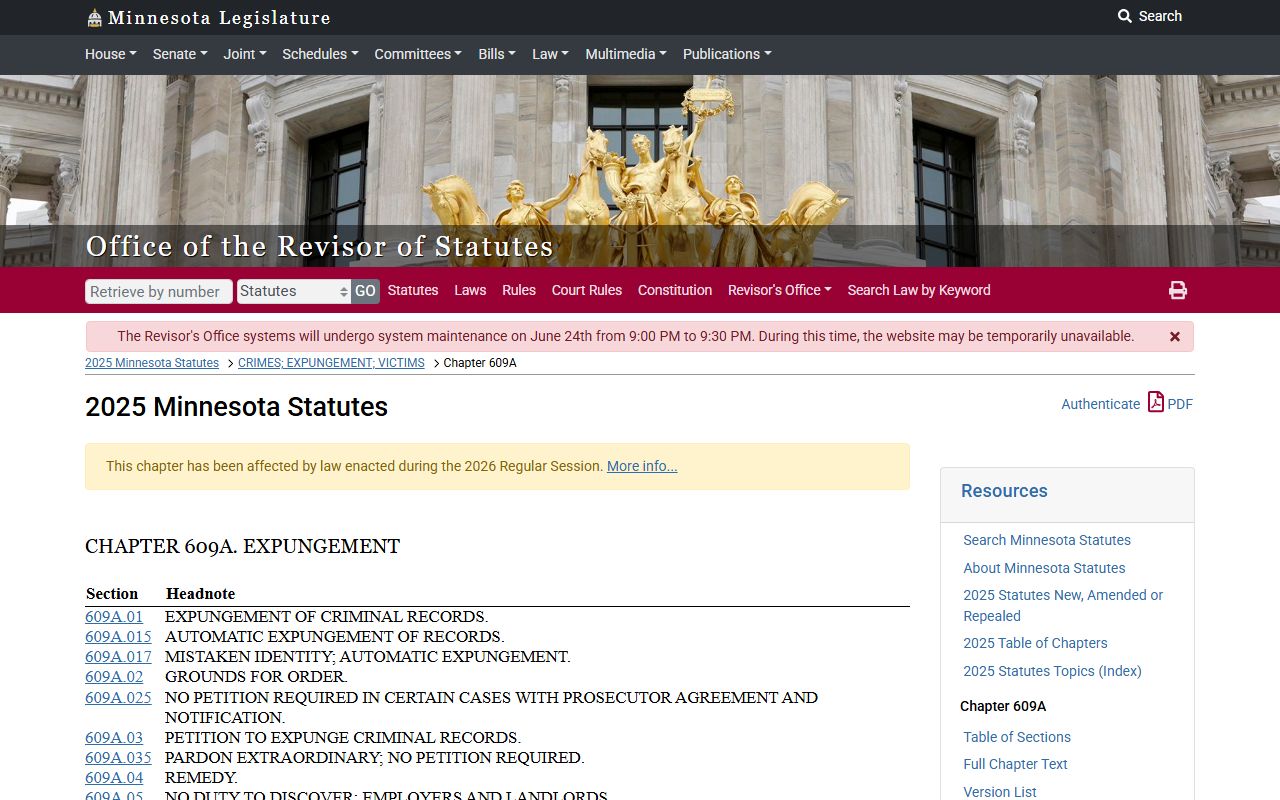
Minn. Stat. ch. 609A - governs Minnesota criminal expungement and sealing from public view.
The Minnesota expungement chapter is the broader statutory source for sealing criminal records from public access.
Expungement changes public access to the criminal case record, but it does not turn an online search tool into a complete criminal history repository.
Background Check Considerations
Casual lookup of a Rock County criminal court record is not the same as an employment, housing, insurance, credit, or licensing background check. Court records can be incomplete online, can contain charges that are not convictions, and can omit nonpublic or sealed material. MCRO is a public court access tool, not a consumer reporting product. Anyone using criminal record information for a regulated decision must follow the laws that apply to that use and verify the result with the originating court when accuracy matters.
Important: Do not treat a pending charge, jail entry, warrant notation, or search-result match as proof of conviction.
Restricted Criminal Court Records in Rock County
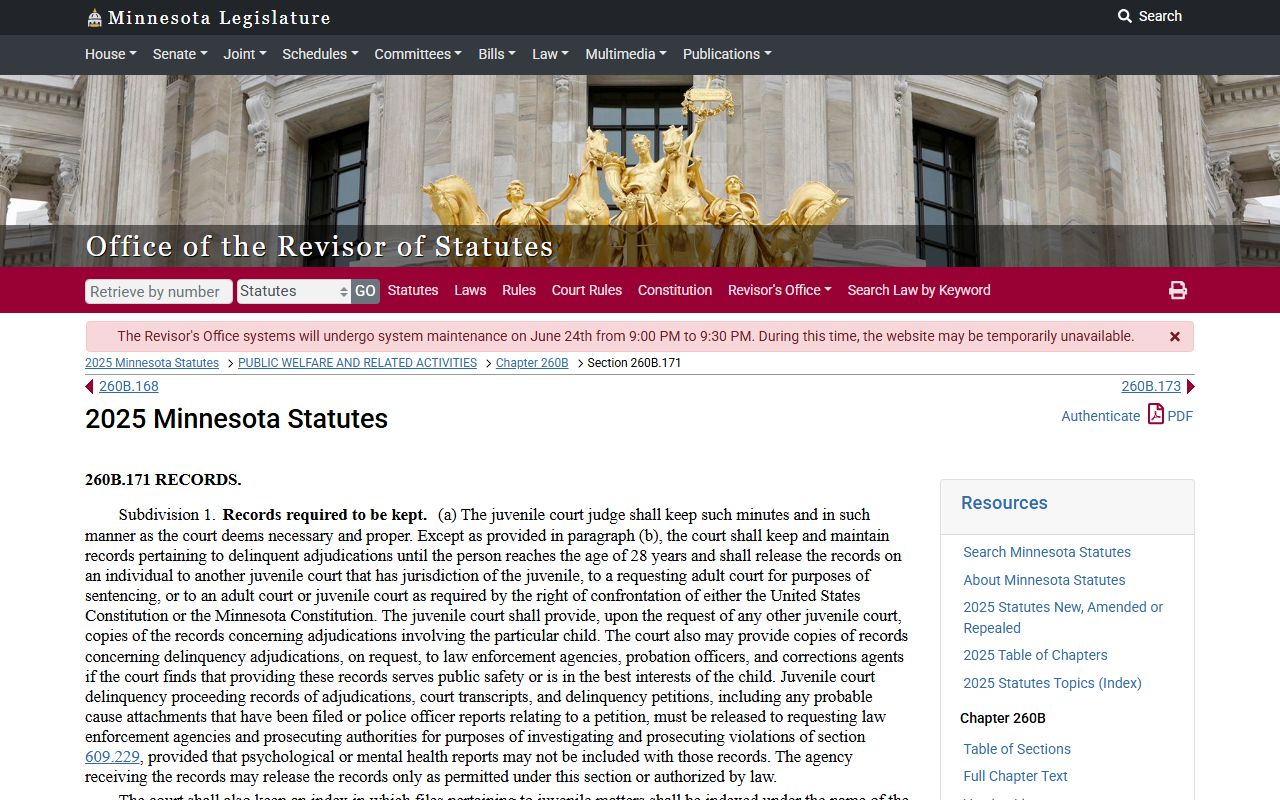
Juvenile delinquency, child-protection, and adoption-related records have special confidentiality rules. Minn. Stat. § 260B.171 gives juvenile court records separate treatment, and public access may be limited to parties, attorneys, guardians, agencies, or people with a court order. Public calendars may show limited information, but full juvenile criminal-related records are not treated like adult District Court criminal files.
The Minnesota juvenile court records statute is the key source for youth-case confidentiality.
Adult criminal records can also be restricted when sealed, expunged, redacted, tied to protected identifiers, or connected to sensitive materials. If MCRO does not show a known Rock County case, contact Rock County District Court Administration with the case number, party name, and approximate filing year rather than assuming no case exists.