
Rock County District Court Overview
The Minnesota Judicial Branch Rock County page identifies Rock County District Court as the court with original jurisdiction over civil, family, probate, juvenile, criminal, and traffic cases filed in Rock County. That broad jurisdiction is the key routing fact for court-record searches. A divorce decree, a criminal complaint, a civil judgment, a probate filing, and a traffic case may involve different case types, but they all sit inside the District Court framework in Rock County.
Court administration is the practical clerk contact. The official court page names Natalie Reisch as Court Administrator and lists the court phone as (507) 935-7006. Court administration handles court-case access, calendars, filings, copy questions, and courthouse process. It does not hold every record in the building. Marriage certificates, vital statistics, real-estate recording, UCC work, assessment, and GIS are handled by the Rock County Land Records Office, which is a separate county office.
The official U.S. Court of Appeals for the Eighth Circuit page is a federal appellate source, not a Rock County District Court portal.
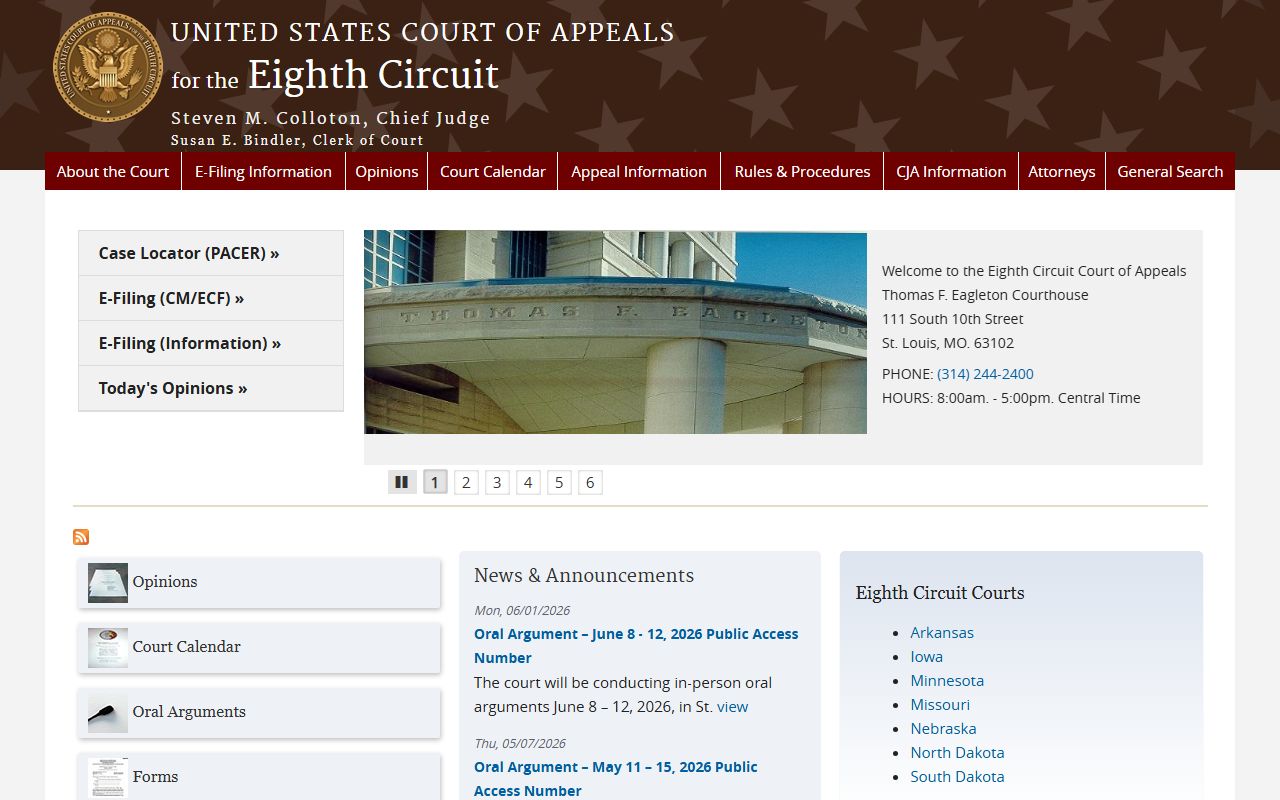
Federal appellate pages are useful only when a case has moved outside Minnesota state court and into the federal system.
Rock County District Court Contacts
Rock County has one local District Court location for the state trial-court records covered by this project. The Fifth Judicial District provides regional administration for many southwest Minnesota counties, but hearings and local case records are tied to the Rock County courthouse in Luverne. There is no official lower local court channel to check before District Court for the record types researched here.
| Court / Office | Type | Address | Phone |
|---|---|---|---|
| Rock County District Court | State trial court | 204 E. Brown Street, Luverne, MN 56156 | (507) 935-7006 |
| Fifth Judicial District | Regional administration | Proceedings occur in county district courts | Use local court for case questions |
| Rock County Land Records Office | Marriage, vital, recording, assessment | 204 E. Brown Street - PO Box 509, Luverne, MN 56156 | (507) 283-5022 |
Rock County Court Hierarchy
Minnesota has three state court levels. District Court is the trial court. The Minnesota Court of Appeals is the intermediate appellate court. The Minnesota Supreme Court is the state's highest court and also regulates attorney practice and statewide court procedure. The official statewide court overview says Minnesota District Court has trial-court judges across the state, with a chief judge in each judicial district responsible for district management.
Rock County sits in the Fifth Judicial District. The Fifth Judicial District page states that the district administratively oversees district courts in fifteen southwest Minnesota counties: Blue Earth, Brown, Cottonwood, Faribault, Jackson, Lincoln, Lyon, Martin, Murray, Nicollet, Nobles, Pipestone, Redwood, Rock, and Watonwan. The district office is not a place to search Rock County records first. It supplies regional court administration.
| Level | Function | Record Search Role |
|---|---|---|
| District Court | Trial court | Creates Rock County case records and calendars. |
| Court of Appeals | Intermediate review | Reviews appeal records from District Court. |
| Supreme Court | Highest state court | Final state review and court-rule authority. |
Rock County Case Flow
Case flow depends on record type. A criminal matter may begin with arrest, citation, complaint, or warrant-related events, then move through first appearance, arraignment, omnibus or pretrial hearings, plea or trial, disposition, and sentencing. A civil case usually begins with a complaint or petition, followed by an answer, motions, settlement work, trial or other resolution, judgment, and possible appeal.
Criminal flow: Arrest or citation › complaint or charge filing › arraignment › omnibus or pretrial › plea or trial › disposition › sentencing › appeal.
Civil flow: Complaint or petition › response › motions › settlement conference or hearing › judgment or order › appeal.
Daily calendars help show where a case sits in that flow. The official Rock County calendar research observed hearing types such as arraignment, pretrial, violation hearing, sentencing, motion hearing, probation violation hearing, omnibus hearing, settlement conference, and general hearing. Those calendar entries are not the full file, but they can confirm the hearing date, case number, judicial officer, and connection type.
District Court Versus Other Offices
Rock County record work often starts in the same courthouse building, but the custodian changes by record type. The District Court holds case files. The Land Records Office handles marriage certificates and vital-statistics forms. The sheriff handles law-enforcement and warrant channels. Nobles County Jail handles custody roster information because Rock County contracts for jail services.
| Need | Primary Contact | Why |
|---|---|---|
| Criminal, civil, probate, family, traffic case file | Rock County District Court | These are District Court records in Rock County. |
| Marriage certificate or license | Rock County Land Records Office | Marriage records are county vital records, not court cases. |
| Active warrant or sheriff record | Rock County Sheriff's Office | The sheriff maintains law-enforcement channels and warrant resources. |
| Inmate custody status | Nobles County Jail roster | Rock detainees are held through Nobles County Jail. |
Access Rock County District Records
Online access uses MCRO, not a county-built database. Case Search, Document Search, Hearing Search, and Judgment Search each serve a different record-access need. A person searching by name should remember the MCRO FAQ warning that a criminal case may not appear in name results if it has not resulted in conviction. Case-number searching is often better for pending criminal or traffic matters.
In-person and copy access goes through Rock County District Court Administration. The statewide copy-request page says many case records are open, but some are not accessible because of confidentiality, sealing, expungement, or court-rule limits. Public copies and certified copies are different. Certified copies come from the court office and are usually needed for formal legal use.
Rock County also has a daily calendar channel for hearing checks. The daily calendar inventory from the research shows party name, hearing location, date, time, judicial officer, hearing type, connection type, and case number. It is a schedule record, not a document repository. Use it to confirm a hearing, then use MCRO Case Search, Document Search, or the Court Administrator for the underlying file. eCheck-in is available for upcoming criminal, juvenile delinquency, and CHIPS matters, which can help parties complete pre-court paperwork before a scheduled appearance.
Note: If MCRO has no result, call Rock County District Court before assuming no case exists.
Rock County Treatment Court
The official treatment court research links Rock County to the Minnesota Cornerstone Drug Court: Rock-Nobles Adult Drug Court. The county-specific treatment court list gives the coordinator as Heather Kirchner, with the program address in Worthington and a phone number for the coordinator. This is a criminal-case pathway, not a separate courthouse or a public database. It may matter when a filed criminal case has substance-use issues, supervision requirements, or a possible treatment-court referral.
The same statewide treatment court source describes Minnesota treatment courts as problem-solving courts that combine supervision, treatment, accountability, and frequent review. No separate Rock County DWI Court, Mental Health Court, Veterans Court, or Family Dependency Treatment Court was located in the official county-specific list. Rock County pages should therefore name the Rock-Nobles Adult Drug Court when discussing local specialty court access and avoid implying that every treatment court type has a separate Rock County program.
Federal Courts Are Separate
Federal court records for Rock County residents or events are not stored by Rock County District Court. The U.S. District Court for the District of Minnesota serves all 87 Minnesota counties. Federal dockets and filings use PACER and CM/ECF, while bankruptcy files use the U.S. Bankruptcy Court for the District of Minnesota.
The official District of Minnesota judges page confirms the federal district's statewide coverage.
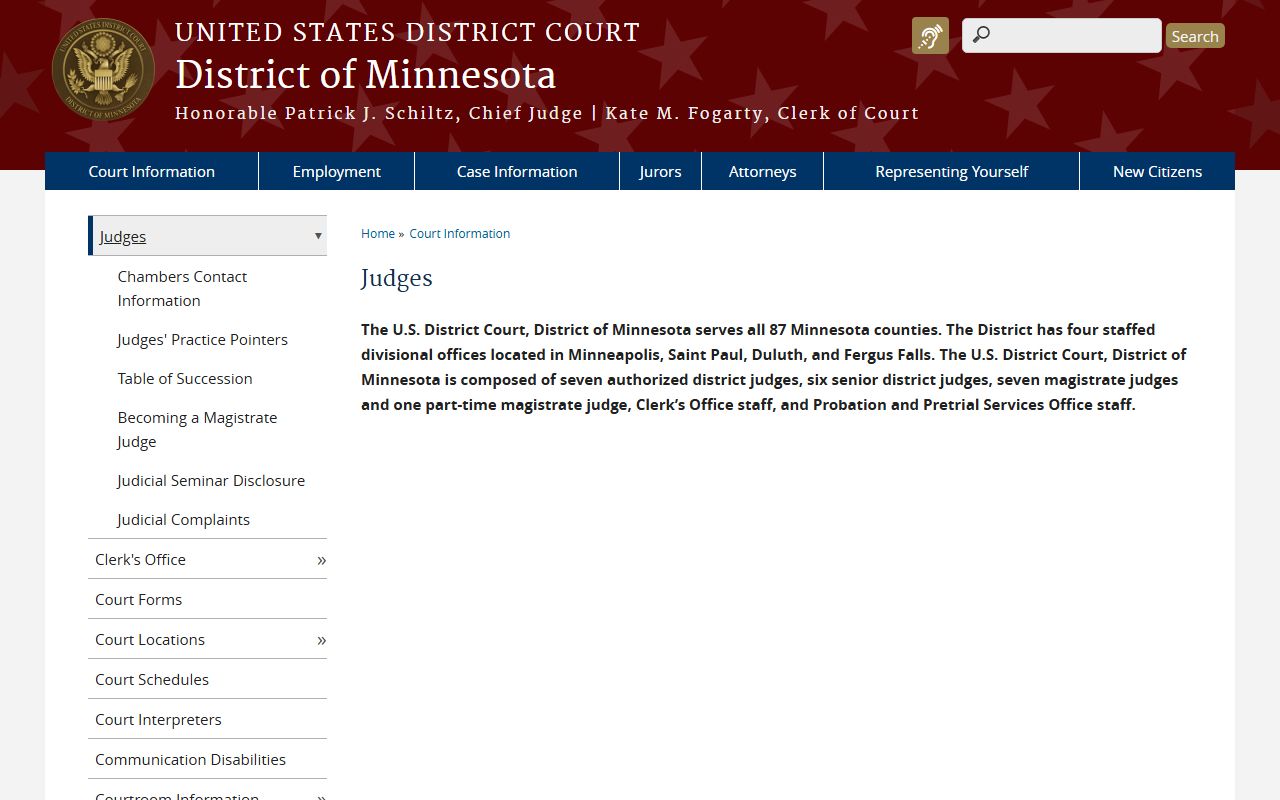
That federal coverage does not make Rock County District Court a federal clerk's office; state and federal cases remain separate record systems.
The U.S. District Court for the District of Minnesota homepage is the starting point for federal trial-court records.
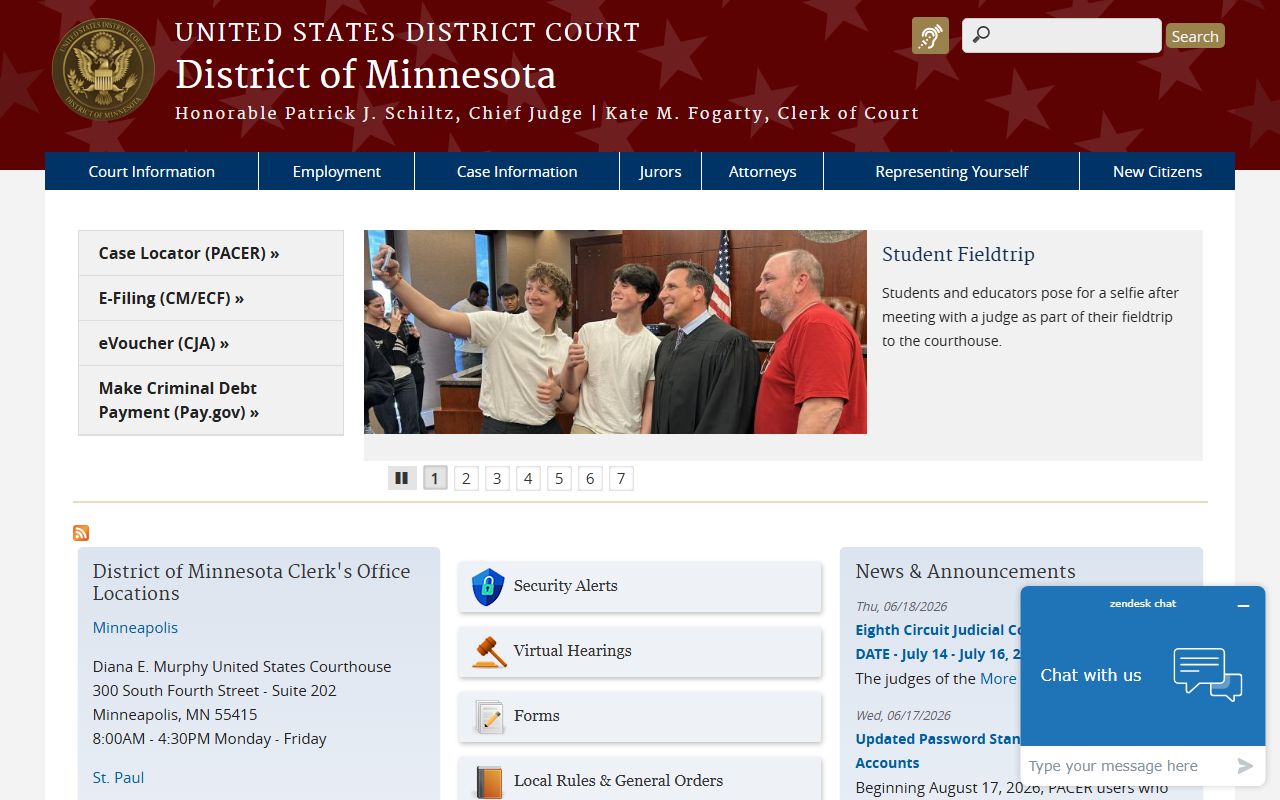
Use PACER or CM/ECF for federal filings, not MCRO, when a case is in federal court.
The Federal Bureau of Prisons inmate locator applies after a federal sentence and commitment.
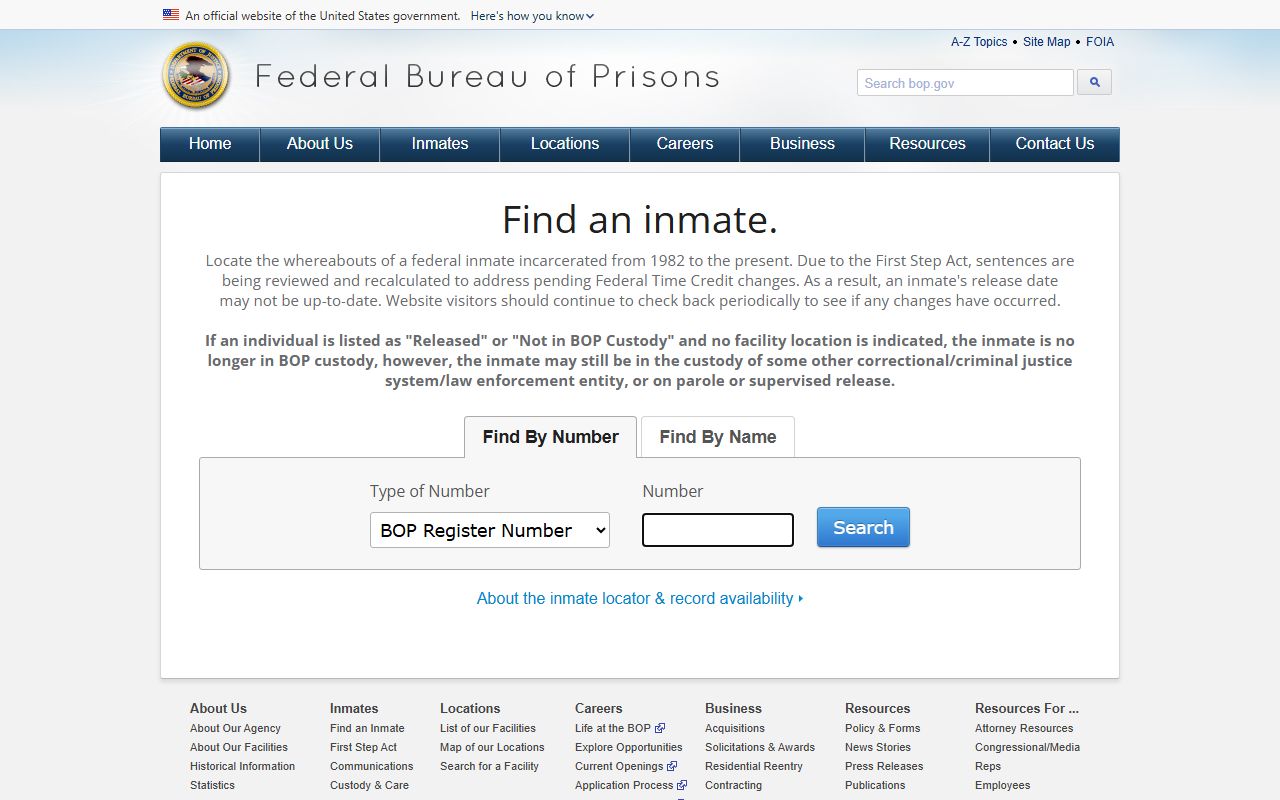
That federal inmate search is separate from the Nobles County Jail roster used for Rock County local custody.
Rock County Courthouse History
Rock County's courthouse history is unusually specific. The first courthouse was a frame building built in Luverne in 1875, with a brick vault added in 1879. The current courthouse was completed in 1888 at a cost of $23,500. The official courthouse-history page describes it as a Richardsonian Romanesque Revival building made from red Sioux quartzite, with Kasota stone arches, a high basement and attic, narrow vertical windows, and a four-story round southwest tower.
The building remains more than a historic landmark. It is the public-facing anchor for modern court access, court administration, eCheck-in links, calendars, and records requests. The courthouse also shares space with county offices, which is why marriage and court records can begin at the same street address while still having different custodians.